
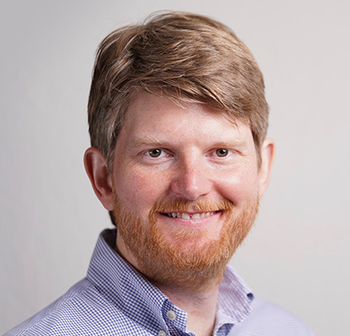
Peter Dürr
Profile
Peter is the director of Sony AI in Zürich. After joining Sony in 2011, he worked on computer vision, AI and robotics research in various assignments at Sony R&D Center and Aerosense Inc. in Tokyo, at Sony R&D Center Europe, and recently Sony AI in Zürich. Peter holds master's degrees in mechanical engineering and management from ETH in Zürich, as well as a PhD in computer and communication science from EPFL in Lausanne.
Publications
Outracing Champion Gran Turismo Drivers with Deep Reinforcement Learning
NATURE, 2022 | Pete Wurman, Samuel Barrett, Kenta Kawamoto, James MacGlashan, Kaushik Subramanian, Thomas Walsh, Roberto Capobianco, Alisa Devlic, Franziska Eckert, Florian Fuchs, Leilani Gilpin, Piyush Khandelwal, Varun Kompella, Hao Chih Lin, Patrick MacAlpine, Declan Oller, Takuma Seno, Craig Sherstan, Michael D. Thomure, Houmehr Aghabozorgi, Leon Barrett, Rory Douglas, Dion Whitehead Amago, Peter Dürr, Peter Stone, Michael Spranger, Hiroaki Kitano
Many potential applications of artificial intelligence involve making real-time decisions in physical systems while interacting with humans. Automobile racing represents an extreme example of these conditions; drivers must execute complex tactical manoeuvres to pass or block...
Autonomous Overtaking in Gran Turismo Sport Using Curriculum Reinforcement Learning
ICRA, 2021 | Yunlong Song*, Hao Chih Lin, Elia Kaufmann*, Peter Dürr, Davide Scaramuzza*
Professional race-car drivers can execute extreme overtaking maneuvers. However, existing algorithms for autonomous overtaking either rely on simplified assumptions about the vehicle dynamics or try to solve expensive trajectory-optimization problems online. When the vehicle...
Super-Human Performance in Gran Turismo Sport Using Deep Reinforcement Learning
IEEE RA-L, ICRA, 2021 | Florian Fuchs, Yunlong Song*, Elia Kaufmann*, Davide Scaramuzza*, Peter Dürr
Autonomous car racing is a major challenge in robotics. It raises fundamental problems for classical approaches such as planning minimum-time trajectories under uncertain dynamics and controlling the car at the limits of its handling. Besides, the requirement of minimizing t...